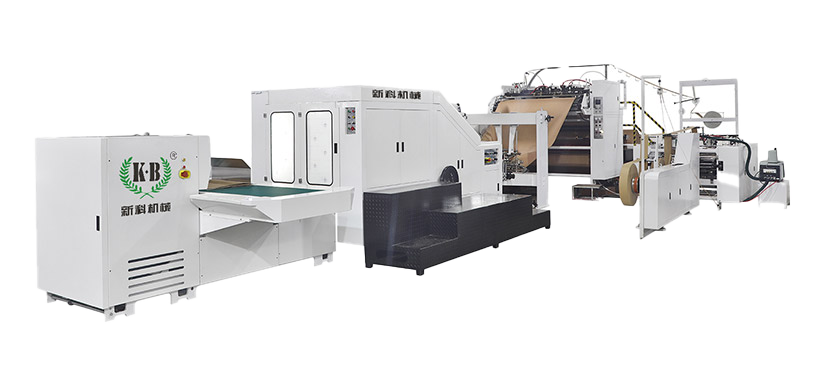
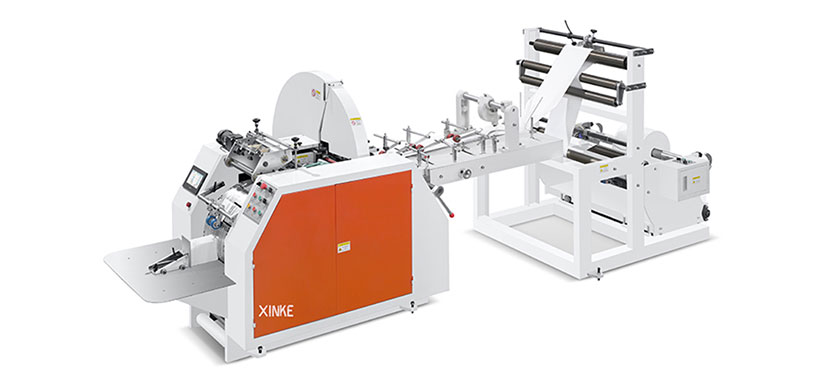
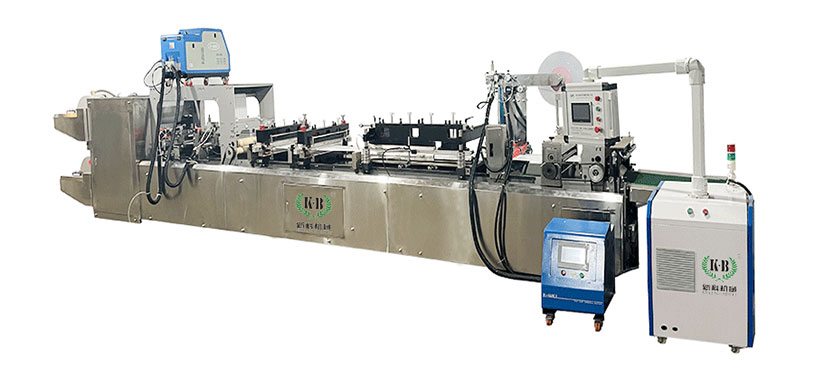
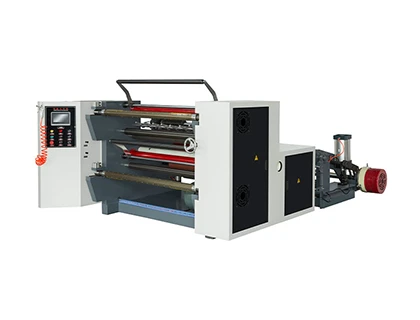
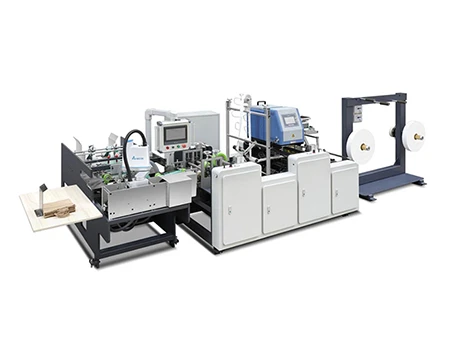
A paper bag machine running at 250 bags per minute sounds like a productive asset—until it stops for 40 minutes to clear a glue nozzle, then another hour to switch from a flat-handle to a twisted-rope format. The output that looked impressive on the spec sheet never reaches the packing station.
That gap between rated speed and usable output is where the 2026 buying conversation has moved. Labor shortages, shorter order runs, and rising pressure to hold margin on mixed-SKU schedules are pushing procurement teams to look past the top-end number and ask a different set of questions. The paper bag machine that wins the order is no longer the fastest one on the floor. It is the one that changes over without drama and tells the operator what went wrong before the line goes down.
What Made Speed the Default Metric—and Why That Is Shifting
For years, the paper bag machine market sold on one number. A higher bags-per-minute figure was easy to compare, easy to put in a brochure, and easy to justify in a capital request. The logic held as long as orders were long and stable: one bag size, one paper grade, one handle type, week after week.
That production profile is becoming less common. Brand proliferation and shorter production runs are raising the value of modular lines, digital controls, and automated setup. A converter who once ran a single grocery bag format for a season now manages a schedule where bag width, gusset depth, paper GSM, and handle style can all change inside a single shift. Under that order mix, a machine optimized only for peak speed becomes a bottleneck at every transition.
There is a second force at work. Experienced operators are harder to find and keep. Higher labor costs and shortages of skilled staff are making automated setup, recipe management, and fault diagnostics practical requirements rather than premium add-ons. When the person who “knows the machine by feel” is not on the floor, the control system has to carry more of the adjustment and diagnosis burden.
Neither of these points makes speed irrelevant. It makes speed conditional: a fast paper bag machine only earns its rating when it can stay in production across the formats a factory actually sells.
The Hidden Cost of a Fast Machine That Stops Often
The case for recipe management and fault diagnostics becomes clearer when downtime is costed properly. A machine rated at 120 bags per minute loses 7,200 bags of output for every hour it sits idle—before counting idle labor or downstream schedule disruption. Those hours accumulate from sources that are predictable and repeatable, not random.
Glue system failures rank as the highest-priority cause of unplanned downtime in paper bag production. Overheated adhesive clogs nozzles, produces uneven application, and forces cleaning stops that can eat 40 minutes at a time. Changeover delays follow closely: a format switch that takes 30–45 minutes on a conventional setup, repeated several times a week, quietly removes productive hours from the month.
The distinction that matters for buyers is between downtime categories. A glue blockage and a size changeover may each cost 40 minutes, but the fixes are completely different—one points to temperature control and nozzle maintenance, the other to recipe storage and servo repositioning. A paper bag machine without clear diagnostic separation leaves the operator guessing which loss category they are dealing with, and guessing is expensive.
This is where a paper bag machine with built-in fault monitoring changes the economics. When the control system identifies the fault location and the loss category, recovery stops depending on operator intuition. The same logic applies to changeover: recipe recall turns a multi-station manual adjustment into a stored parameter set the machine can repeat.
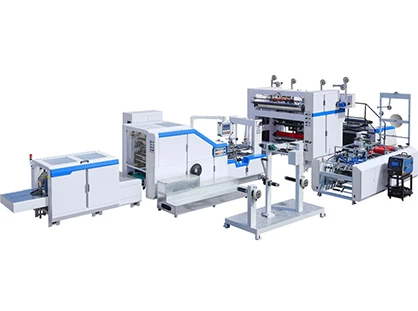
What Recipe Management Actually Changes on the Floor
Recipe management is not a marketing label for “a touchscreen.” It is a control architecture decision that determines how much of a changeover depends on human memory.
From operator-dependent adjustment to stored parameters
On a machine without recipe storage, every size change is a sequence of manual inputs: feed timing, sealing temperature, bottom-fold pressure, ejection timing, glue volume. The values live in a notebook, a laminated card, or the operator's head. If the operator is new, the values are learned by trial and error, and the scrap rate during ramp-up reflects that learning curve.
A recipe-managed paper bag machine stores the approved parameter set for each bag specification. The operator recalls the recipe, confirms the physical change parts, and starts. Modern intelligent machines with recipe storage and quick-change systems can reduce changeover to 5–10 minutes, compared with 30–60 minutes on basic lines. The machine is not necessarily running faster at peak. It is spending more of the shift producing.
The labor math behind the control decision
The labor case is straightforward. Fully automatic machines typically save 2–3 operators per shift compared with semi-automatic setups. At annual labor costs of $25,000–40,000 per operator, that translates to $50,000–120,000 in annual savings before any speed difference is counted. A machine that a new operator can set up from a stored recipe extends that advantage into the changeover window, where semi-automatic lines still depend on experienced hands.
For a converter weighing paper bag machine price against long-term cost, the relevant comparison is not purchase price versus purchase price. It is the 5-year total cost of ownership: energy, labor, glue, spare parts, waste, and downtime loss all sit in the model alongside the invoice. Recipe management and diagnostics move several of those lines in the right direction at once.
Where Fault Diagnostics Fits Into the Buying Decision
Fault diagnostics sits on a spectrum, and buyers should know which end of it a machine occupies before comparing quotations.
At the basic end, the machine stops and displays an alarm code. The operator consults a manual or calls a technician. At the more integrated end, the system continuously monitors paper alignment, temperature, glue condition, and drive behavior, then stops the machine with a specific fault location when a parameter drifts outside the acceptable window. The practical difference is the time between “something is wrong” and “here is what to check first.”
Diagnostics as a changeover tool, not just a breakdown tool
The more underrated role of diagnostics is during setup, not just during failure. A paper bag machine that is switching from one bag size to another is temporarily outside its stable operating window. Tension, registration, and glue patterns are all re-establishing themselves. A diagnostic system that flags misalignment or temperature imbalance during the first few dozen bags of a new recipe prevents a small setup error from turning into a scrap pile or a jam at the bottom-forming station.
This is why recipe management and fault diagnostics belong in the same conversation. Recipes reduce the frequency of adjustment; diagnostics reduce the cost of the adjustments that remain. A machine with one but not the other leaves part of the changeover risk unaddressed.
What to Verify Before You Compare Paper Bag Machine Prices
The 2026 buyer’s checklist has shifted from “what is the top speed” to “what happens between orders.” A practical verification sequence looks like this:
Ask for changeover time on the bag sizes you actually run, not the easiest format in the catalog. Then ask which parameters the machine stores and which require manual setting. A recipe that covers speed and length but leaves glue temperature and bottom-fold pressure to operator judgment is only a partial recipe.
Run a fault scenario during the factory acceptance test. Introduce a controlled paper misalignment or a temperature drift and observe how the machine responds—does it identify the location, does it suggest a first check, or does it simply stop? The difference between those responses shows up on the production floor months later.
Finally, connect the control features to the total cost model. A paper bag machine with recipe storage and diagnostics may carry a higher upfront figure than a stripped-down alternative, but the 5-year TCO comparison is where the gap usually closes or reverses. The machine that prevents a 40-minute glue stop every week is not more expensive in any meaningful sense. It is cheaper in the categories that repeat.
FAQ
Does a paper bag machine with recipe management cost significantly more than a basic model?
The upfront difference varies by configuration, but the relevant comparison is 5-year total cost of ownership, not sticker price alone. Recipe storage and diagnostics reduce changeover loss, scrap during ramp-up, and unplanned downtime—three cost lines that compound over the life of the machine.
How much changeover time can recipe management actually save on a paper bag machine?
On machines with quick-change systems and stored recipes, changeover can drop to 5–10 minutes, compared with 30–60 minutes on conventional lines. The saving depends on how many format changes the factory runs per week and whether the recipe covers all critical parameters, including glue and fold pressure.
What is the most common fault a paper bag machine diagnostics system should catch?
Glue system issues are the highest-priority downtime category in paper bag production—overheated adhesive, clogged nozzles, and uneven application account for frequent stops and cleaning delays. A diagnostics system that monitors glue temperature and nozzle condition addresses the single most repeatable loss source.
Have a specific order mix in mind?
If your schedule includes several bag sizes, handle types, or paper grades per week, the paper bag machine decision is really a changeover and recovery decision. Share your format list, typical run lengths, and paper GSM range, and our team can map the recipe and diagnostic requirements against the configurations that fit your production profile—rather than the speed rating that looks best on a quote.
[Contact Us] — Tell us what you run and how often it changes.

 EN
 Chinese
 Français
 Español